

An Interview with the Former World Champion Ding Liren: Sports, Engines, Rest
In early March, Jonathan Zhi had the chance to do a written interview with Ding Liren. His answers are translated from Chinese; the original answers are available here. The questions draw heavily from previous interviews, articles, podcasts, and TV shows that Ding has given, particularly Chinese-language ones. Jonathan started following professional chess during college. At some point, Jonathan realised that many interesting players don't get to fully express themselves in the media. He started doing interviews to highlight those players and help them share their thoughts, stories, and personalities. Read this conversation with the former World Champion Ding Liren
A few lighthearted questions

Jonathan Zhi: One of the nicknames you’ve gained is “Aircraft Carrier”. Where is that from?
Ding Liren: Brother [Ni] Hua *1. (哥) came up with it, describing how slow I am to turn around. Haha. Or maybe it’s suggesting that I’m very powerful, the tyrant of the sea, loaded with many weapons (new moves) onboard.
Jonathan: In college, you had some mandatory military exercises and would think about chess to pass the time. Can you tell us more about that?
Ding: Yes, the summer after my freshman year, I took part in the military training *2. (军训) that my school organised. During that period, my mind would often drift subconsciously to chess. Standing at attention and doing sentry duty at night were tedious tasks that required long stretches of maintaining a fixed posture. To fight this boredom, I started thinking about openings, playing games against myself in my mind. I remember coming up with a gambit variation in the Old Indian Defence. I never ended up playing it, and it was lost in the wind.
Jonathan: How is your badminton? What else are you keeping busy with outside of chess?
Ding: My level is average-ish; currently, my doubles win rate is 47%. In Wenzhou, I keep a scheduled time every week to play badminton. Outside of that, I also enjoy watching soccer and following the results for my favourite team. I haven’t changed that much from before; my life mostly revolves around sports.
Enjoying chess, competing, and using engines
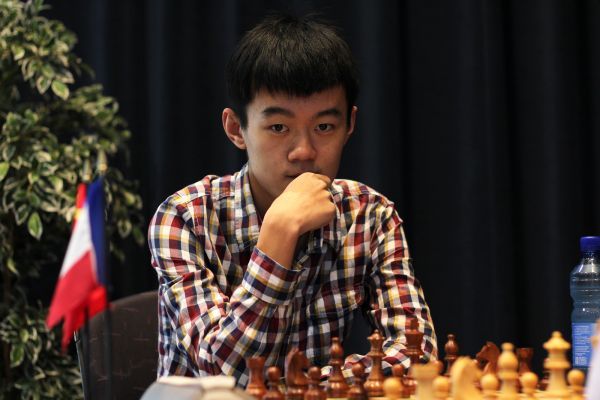
Jonathan: You’ve mentioned some practical reasons for being a chess player (for example, that chess was an easier path than studying). Those considerations aside, do you enjoy being a chess player?
Ding: I quite enjoy my current situation. What I mean is, being a player with an inactive rating, who seldom participates in elite invitationals. I’m enjoying this rare moment of leisure.
Jonathan: When players are asked about motivation, they often mention specific goals, like reaching the Candidates. But for you, many of those peaks are already explored. Where do you find motivation or meaning now, as a chess player?
Ding: Enjoyment. I keep up playing the occasional game online: it doesn’t require arduous pre-game preparation, just undivided concentration in the moment. The process itself is rewarding.
Jonathan: Over your career, how has your enjoyment of chess changed? When did you enjoy chess the most?
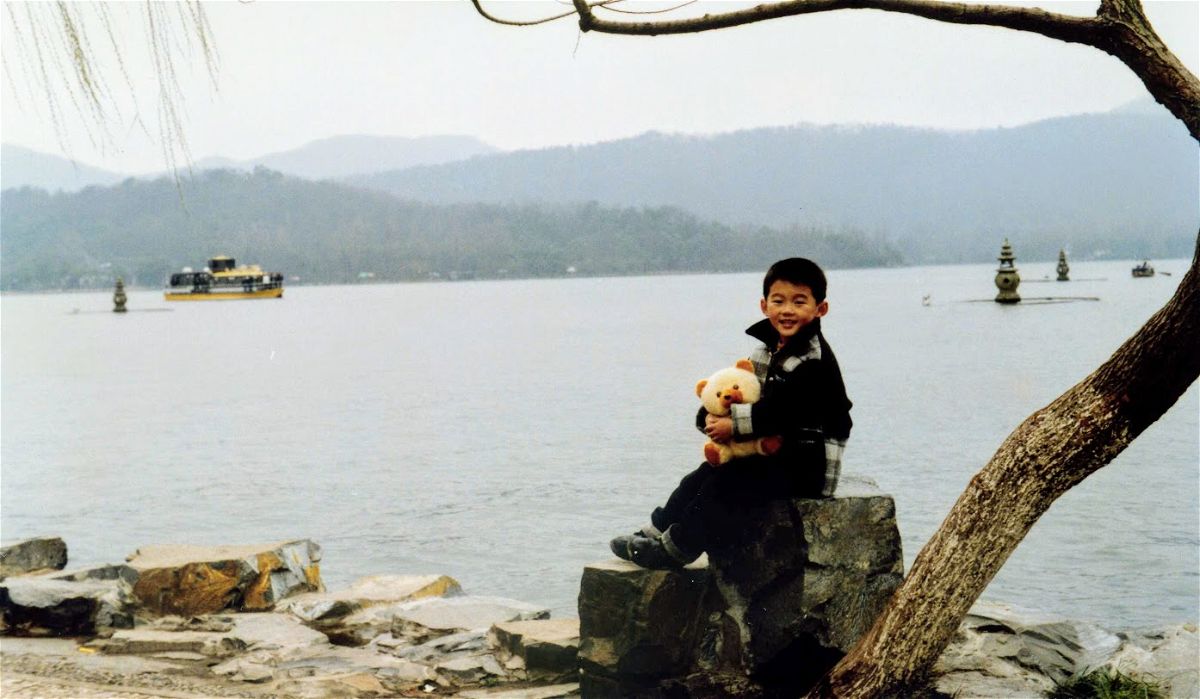
Ding: Probably the same all along. Except for a brief period, I’ve always carefully protected this love. As a player, I’m not competing that often; I’ve set aside enough time for myself to rest. And in the last few years, I changed my training methods, allowing me to continue more sustainably and enduringly.
Jonathan: As a young player, you learned from things like Kotov’s books and the Rybka engine. How would things be different if you had grown up a decade later, with modern engines?
Ding: In that case, maybe I would not have studied other players, gone through fewer games, and spent more time analysing with stronger engines, to more quickly discover the best approach to positions. It would be possible to achieve greater results with less effort.
Jonathan: There was a time when you studied mostly chess games between engines, rather than humans…
Ding: I think this training method is where I differ from other players, the source of my distinctiveness. In general, the strength of modern players has risen: you need to discover chances in equal positions, to squeeze water from rocks, which means you need to play with an engine’s precision. Not to mention that, just like admiring the best human games, studying engine games is in itself full of enjoyment.
Jonathan: As a level-headed, analytical person, does pure logic ever feel cold or empty?
Ding: Stockfish represents the highest level of chess skill; it embodies absolute rationality. But different AIs have different playing styles and different perspectives from which they consider positions. We can approach chess through other AIs to play something of our own style. It’s like what Wang Xiaobo said, quoting [Bertrand] Russell: diversity is essential to happiness.
Jonathan: During your 2023 World Championship match, you had mixed feelings about the games. When your opponent played an inaccurate move, you felt disappointed that the game was marred by human error, even though it gave you the advantage. Or during Game 8, you felt little motivation to win, because a victory would still be full of mistakes
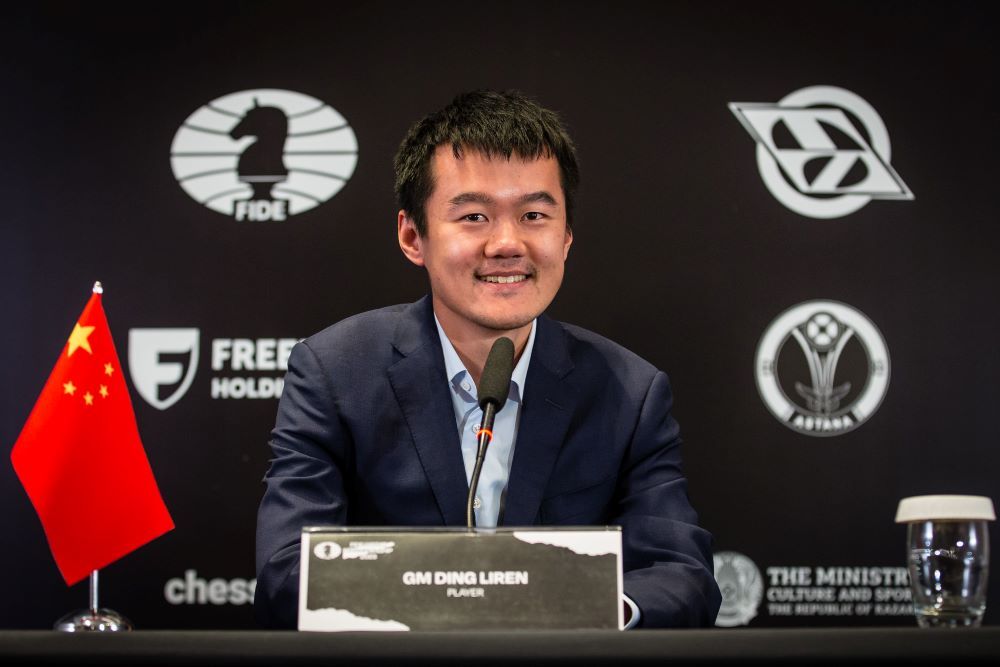
Ding: It’s like when you’re playing badminton, and victory is already in hand: you might return a ball that would have gone out of bounds. I don’t know why it is that at key points during the game, I’ll value the process more than the result. I think the best games come about from both players’ joint efforts.
Jonathan: Do you ever play against LeelaKnightOdds or other engines?
Ding: No; out of fear of tilting, getting mentally shattered. I’ve only played one 3+2 game against LeelaQueenOdds—a win.
Jonathan: Do you enjoy blitz and rapid?
Ding: I quite like it; it’s both competitive and entertaining. My favourite time control right now is 3+2, but it’s hard to find opponents online, so sometimes I’ll compromise with 3+0. It tests your decision-making under time constraints.

Wrapping up
Jonathan: Aside from various responsibilities (like training with the national team), what are you most interested in doing now?
Ding: Completing your interview and then watching some of the top-level games happening right now.
Jonathan: What advice would you give your past self?
Ding: I wish my younger self had studied more and persisted in academics a bit longer, not letting it fall to the wayside. That way, later years of life might be richer. People always dwell on the things they didn’t do (or paths they didn’t take).
Jonathan: In an interview, you once referenced the Kernel-pult from Plants vs. Zombies. Have you ever played that game? Are there other games that you enjoy?
Ding: I’ve played it before. Nowadays, I sometimes play FC, a soccer game, as well as bughouse. I’ve realised that there’s a diverse enough selection of chess variants to take the place of other online games.
Jonathan: You mentioned enjoying lobster in Spain. What’s your favourite food from competing abroad?
Ding: Russia’s wood-grilled steak. It’s how I rewarded myself after a win, an especially delectable taste.
Jonathan: You’re known to be a reader. What are some books you’ve enjoyed recently?
Ding: Speaking of that, I haven’t read much for a while now. A book I finished recently was Yuan Zi’s “Where Does the Light Come From?”. The philosophical portions of it are very gratifying.
Jonathan: Is there anything you would like to tell your fans?
Ding: Thank you, everyone, for your support. Keeping a low profile *3.“韬光养晦” is for a better return.
In Chinese, terms like 哥 (gē, older brother) or 姐 (jiě, older sister) refer literally to family members, but can also be used in familiar, non-familial relationships, e.g., between team or clubmates. In this case, 哥 expresses both closeness and respect for Ni Hua, who has been an older teammate, captain, and second to Ding.
军训 (jūn xùn) refers to mandatory military training for students in China. The training usually takes place over several weeks in the summer, before school starts.
Literally translated, the idiom “韬光养晦” is something like “concealing the light, growing in darkness”. A common translation is “to conceal one’s strength and bide one’s time”. Regardless of its exact meaning, Ding’s chess return is something to look forward to.

About the Author

I started following professional chess during college. At some point, I realised that many interesting players don't get to fully express themselves in the media. I started doing interviews to highlight those players and help them share their thoughts, stories, and personalities. The journey has just begun--let's see where it goes.
Underpromoted: An Initiative by Jonathan Zhi
In chess, underpromoting means promoting a pawn to a piece other than a queen. The Idea of the Underpromoted is about highlighting chess figures who are underpromoted in the media and giving them an opportunity to express their perspectives, stories, and personalities.
Important Links of Underpromoted
The article is edited by Devansh Singh
Related News


